March 12, 2025
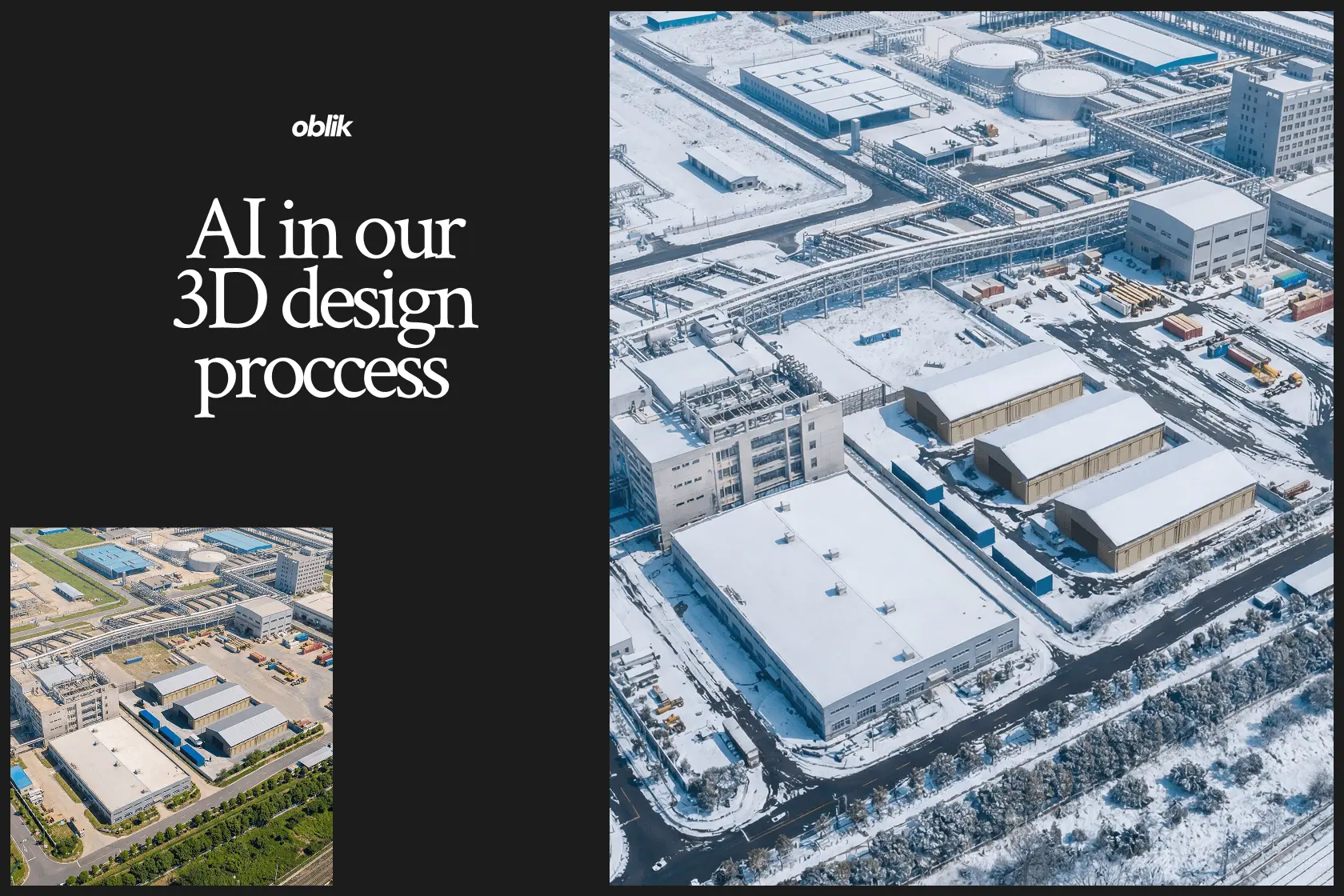
The architectural visualization industry has always been driven by a balance between artistic vision and technical precision. Today, artificial intelligence is reshaping that balance—introducing new ways to accelerate workflows, enhance creativity, and refine the final output. At our studio, we approach AI not as a replacement for expertise, but as a tool that amplifies it.
1. From Concept to Composition
Early-stage ideation is one of the areas where AI delivers immediate value. Generative tools allow us to rapidly explore mood, lighting scenarios, and stylistic directions before committing to full 3D production. Instead of starting from a blank canvas, we can establish a strong visual direction in a fraction of the time, aligning faster with clients and stakeholders.
However, these outputs are not final decisions — they serve as references. The real work still happens in 3D, where accuracy, scale, and architectural intent are preserved.
2. Speed up routine proccesses.
A significant portion of any visualization pipeline involves repetitive tasks: asset placement, material adjustments, upscaling textures, or post-production cleanup. AI helps automate or streamline many of these steps.
Examples include:
• Smart upscaling of textures and renders without quality loss
• Automated masking and selection in post-production
• Assisted asset generation for background or secondary elements.
Faster iteration cycles through AI-enhanced previewsThis doesn’t eliminate the need for artists — it removes friction, allowing them to focus on decisions that actually impact the image.Enhancing, Not Replacing, Artistic ControlOne of the biggest misconceptions around AI in creative industries is that it replaces human input. In reality, the opposite is true — AI outputs are only as strong as the direction behind them.
Lighting, composition, storytelling, and architectural accuracy still require trained eyes and experience. AI can suggest, accelerate, and augment, but it cannot fully understand the intent of a space, the narrative behind a design, or the subtlety of atmosphere in the way a skilled artist can.
Post-Production and Final PolishAI has become particularly powerful in post-production. Tools for image enhancement, detail reconstruction, and subtle corrections allow us to push renders further without reworking entire scenes.
3. This results in:
• Cleaner, sharper final images
• More efficient revision cycles
• Greater flexibility in meeting tight deadlines
At the same time, maintaining a consistent visual identity remains critical. AI is used selectively to ensure that every image still reflects our studio’s standards and style.
4. A Hybrid Future
The future of architectural visualization is not fully automated—it’s hybrid. Studios that succeed will be those that combine strong artistic direction, solid technical foundations, and thoughtful integration of AI tools.
For us, implementing AI is about working smarter, not faster for the sake of speed. It’s about freeing up time for creativity, improving consistency, and delivering higher-quality visuals without compromising the craft.In the end, AI becomes just another layer in the pipeline — one that, when used right, elevates both the process and the result.